Selecting Cooling Fans for Special Environments: Dealing with High Temperatures, High Humidity and Corrosive Environments

In sectors such as industry, telecommunications and outdoor electronic equipment, cooling fans are frequently exposed to high temperatures, high humidity or corrosive gases. Incorrect selection can, at best, shorten the service life of the equipment and, at worst, lead to downtime. This article provides clear selection criteria and practical advice for three specific types of environments.
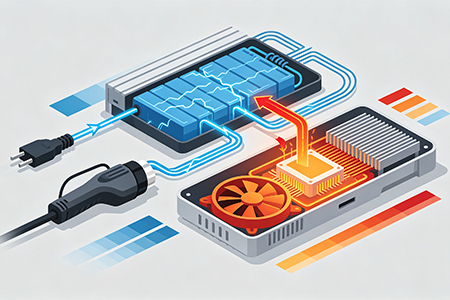
Why do chargers generate heat?
Electric vehicle chargers (whether AC charging points or DC charging modules) are, by their very nature, high-power power electronic devices. Their core internal components include rectifiers, power factor correction (PFC) circuits and DC-DC converters; these components inevitably generate conduction losses and switching losses during operation. When the charging power reaches tens or even hundreds of kilowatts, even with an efficiency as high as 95 per cent, several kilowatts of energy are still converted into heat. If this heat cannot be dissipated promptly, the internal temperature will rise rapidly.
I. High-Temperature Environments: Risk of Dual Failure (Electrical and Lubrication)
The primary threat posed by high temperatures to fans lies in the accelerated ageing of motor winding insulation (insulation life is halved for every 10°C increase in temperature) and the rapid evaporation or carbonisation of bearing grease.
Key Selection Criteria:
● Motor Grade: Confirm the fan’s specified operating temperature range; prioritise ball-bearing fans capable of withstanding temperatures above 80°C, as oil-impregnated bearings are prone to seizing at high temperatures.
● Drive IC: Select models with built-in overheat protection to prevent the chip from being damaged by current overload during stalling.
● Material Compatibility: Select fan blades made from glass-fibre-reinforced PBT or PPS materials to prevent loss of dynamic balance due to high-temperature deformation.
● Practical verification: In addition to the specification sheet, request that the supplier provide actual L10 lifetime test data (a failure rate curve based on continuous operation at the target temperature).
● Typical scenario: The ambient temperature inside a sealed cabinet can reach 65–75°C. In such cases, select a fan rated for 100°C and derate it appropriately (ensuring the actual current does not exceed 80% of the rated value).
II. High-humidity Environments: The Chain Reaction of Condensation and Mould
When humidity exceeds 85% RH, condensation is likely to form inside the fan, leading to PCB corrosion, a reduction in insulation resistance, and even short circuits. Prolonged exposure to high humidity can also foster the growth of mould, which may block the air ducts.
Selection Criteria:
● Protective Coating: PCBs must be coated with a triple-proof varnish (acrylic or polyurethane type) with a coating thickness of ≥50 μm; a second coat must be applied to the pin areas.
● Sealing Rating: Prioritise fans with an IP54 or higher protection rating; the motor housing must be sealed with potting compound.
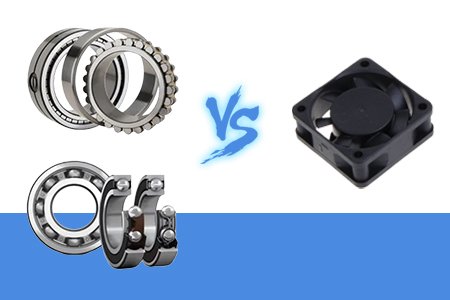
● Bearing Selection: Sealed ball bearings are preferable to open designs, as they effectively prevent moisture from penetrating the lubricant layer.
● Operating Strategy: If the equipment operates intermittently, it is recommended to keep the fan running at low speed (or use a heater for auxiliary dehumidification) during downtime to prevent condensation build-up whilst the equipment is idle.
Typical Scenarios: For outdoor telecommunications base stations and offshore engineering equipment, it is recommended to install the fan at the cabinet’s exhaust vent rather than the intake vent, utilising the equipment’s own heat to reduce local humidity.
III. Corrosive Environments: Progressive Attack on Materials by Chemical Gases
In settings such as chemical plants, sewage treatment facilities and marine atmospheres, sulphides, chloride ions and salt spray can corrode fan blade coatings, motor windings and solder joints. Initially, this manifests as fluctuations in rotational speed; in later stages, it may lead to short circuits and fires.
Key Selection Criteria:
● Fan Blade Material: Avoid using standard aluminium alloy or uncoated metal fan blades; instead, opt for one-piece injection-moulded PPS/PA66 engineering plastics, or aluminium alloy that has undergone anodising and sealing treatment.
● Motor Protection: Select a sealed, moulded motor, where the windings are completely encapsulated in epoxy resin to prevent the ingress of corrosive gases.
● Terminals and wiring: Select connectors with gold-plated or tin-plated terminals; the insulation material should be corrosion-resistant FEP or silicone rubber to prevent PVC from rapidly becoming brittle in the presence of chemical gases.
● Filtration protection: Fitting an activated carbon filter (to be replaced regularly) at the air inlet can effectively reduce the concentration of chemical gases; however, note that static pressure will decrease by 20%–30%, so a margin for compensation must be factored in during selection.
Typical application: Offshore wind power converter cabinets. In addition to selecting salt-fog-resistant fans, it is recommended to use positive-pressure ventilation within the cabinet to prevent corrosive gases from entering from the outside.
IV. General Selection Process and Tips for Avoiding Pitfalls
1. Prioritise factors: If high temperature and high humidity co-exist, prioritise addressing the high temperature (as high temperatures accelerate corrosion reactions); if the concentration of corrosive gases far exceeds the standard, material selection takes the highest priority.
2. Request specific test reports: Do not rely solely on the IP rating; review the actual test results for ‘salt spray testing (GB/T 2423.17)’ and ‘humidity-heat cycling (GB/T 2423.4)’.
3. Prioritise service life alignment: In specialised environments, fan service life is often reduced to between one-third and one-half of the rated value; it is recommended to design for a replacement window or to adopt a redundant parallel configuration.
4. Avoid a ‘one-size-fits-all’ approach: Standard commercial fans are highly likely to fail within a few months in specialised environments; the initial cost savings are far outweighed by subsequent maintenance costs and production downtime losses.
Selecting cooling fans for specialised environments is not simply a matter of matching specifications, but rather a comprehensive balancing act involving materials science, motor design and on-site operating conditions. It is recommended to continuously optimise the selection database based on actual operational data and to establish a joint testing mechanism with suppliers. Remember: there is no such thing as a ‘one-size-fits-all fan’; there are only solutions ‘suited to the specific application’.
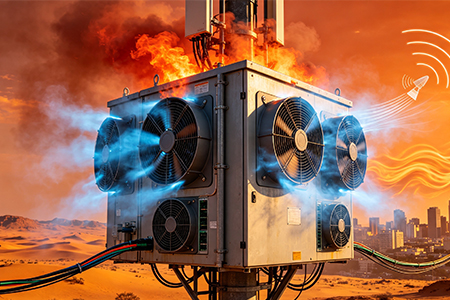
With frequent heatwaves occurring worldwide, how can cooling technologies for telecoms infrastructure break the deadlock?
The Importance of Thermal Management in Electric Vehicle Chargers