Exploring thermal management solutions for modern industries

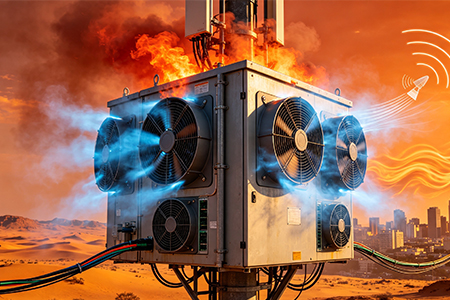
As chip power consumption surpasses the kilowatt level, as cars transition from mechanical to electric propulsion, and as mobile phones begin to incorporate built-in fans to manage the heat generated by large AI models, thermal management has evolved from an engineering detail into a core issue that every industry must address. In this thermal management revolution, the cooling fan industry is undergoing an unprecedented transformation—it has not been phased out, but is instead undergoing a metamorphosis.
A Continuously Expanding Market
The global cooling fan market reached US$10.23 billion in 2025 and is projected to grow to US$24.32 billion by 2034, representing a compound annual growth rate (CAGR) of 10.1 per cent. This growth is driven by several key factors: the explosive expansion of AI computing infrastructure, the transition to electric vehicles, and the urgent need for heat dissipation arising from the increasing performance of consumer electronics. North America currently holds the largest market share (32.74 per cent), but the Asia-Pacific region is the fastest-growing, with a compound annual growth rate of 11.8 per cent.
Data Centres and AI: Re-evaluating the Value of Fans
AI servers are pushing data centre thermal density to its limits. Power per rack has soared from 15–20 kW in the past to 60–100 kW, and traditional air cooling is no longer able to cope effectively. As a result, the adoption rate of liquid cooling has risen sharply—from just 14 per cent in 2024 to a projected 47 per cent by 2026.
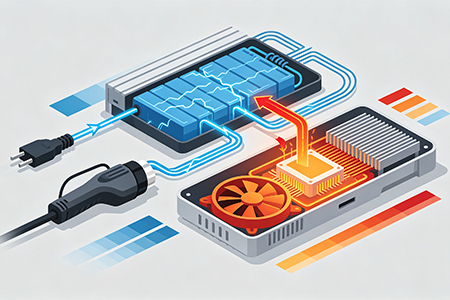
However, a common misconception is that liquid cooling will replace fans. In fact, unless immersion cooling solutions are adopted, mainstream direct-to-chip liquid cooling still requires water-cooled heat exchangers paired with high-performance fans to dissipate heat. Every component of a liquid cooling system—from the cooling distribution units and the ‘sidecar’ heat exchangers on the cabinet sides to the external heat dissipation via cooling towers—has a strong demand for high-static-pressure, large-sized fans.
More crucially, the technical barriers for fans specifically designed for AI servers far exceed those for standard fans. Take the dual-motor counter-rotating design as an example: two sets of blades rotate in opposite directions to generate extremely high static pressure, whilst simultaneously requiring vibration to be controlled to the micrometre level to avoid affecting the read/write performance of precision hard drives. This drives the unit price of high-end AI server fans to more than ten times that of traditional products. By 2025, fan modules for liquid-cooling-assisted cooling systems accounted for 19 per cent of total annual shipments, and it is projected that the share of specialised fan modules will rise from less than 6 per cent to 21 per cent by 2030.
An often-overlooked hidden challenge is that liquid cooling provides localised heat dissipation. When the system’s fan array is significantly reduced, ‘forgotten components’ such as memory, SSDs and optical modules are left in a harsh thermal environment characterised by stagnant air. As temperatures approach thresholds, this triggers throttling; when these effects accumulate at the system level, they ultimately lead to reduced data centre throughput and rising operational costs. This implies that data centres’ demand for precise micro-cooling solutions has, in fact, increased.
New Energy Vehicles: A System-Level Transformation in Thermal Management
In the new energy vehicle sector, thermal management has evolved from a matter of individual components to a system-level engineering challenge. By 2026, a single new energy vehicle will be equipped with 8 to 12 cooling fans, primarily used for battery thermal management and motor controller cooling. The explosive growth in high-performance computing chips for automotive applications has further driven demand for small, precision fans meeting automotive standards.
In the commercial vehicle sector, Xuelong Group is accelerating the development of high-voltage, high-power electric fan assemblies for new energy commercial vehicles. Its low-voltage electronic fans have already entered the trial assembly and road testing phases with leading original equipment manufacturers (OEMs); should mass production commence in 2026, the company will fully capitalise on the benefits of the industry’s transformation. Meanwhile, the widespread adoption of ultra-fast charging stations has made liquid-cooled charging guns and high-power fan cooling modules standard requirements for infrastructure development in 2026.
Consumer Electronics and Industry: Pushing the Boundaries of Thermal Management
Cooling fans are breaking through the boundaries of traditional applications. In the consumer electronics sector, OPPO has already integrated ultra-thin fans into non-gaming models, whilst Honor has announced that its entire flagship series will be equipped with fans, signalling that active cooling technology is becoming standard on high-performance devices. More cutting-edge MEMS fan technology is bringing cooling components down to the chip level – AAC Technologies’ piezoelectric MEMS fan is as thin as 1 mm and can achieve an airflow of 3 L/min at a power consumption of 100 mW. Mass production is expected to commence in 2027, and the technology is set to be widely adopted in AI-enabled smartphones and XR devices.
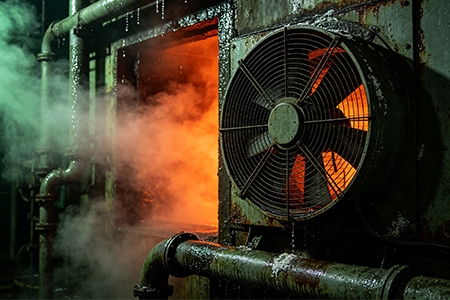
Applications in industrial settings are also expanding. Emerging sectors such as energy storage equipment and hydrogen fuel cells are creating a new growth driver for corrosion-resistant, long-life fans. Tighter energy efficiency regulations are also driving technological upgrades—new EU regulations due to come into force in 2028 require industrial fans to meet the IE4 energy efficiency standard, prompting companies to accelerate the adoption of high-efficiency technologies such as magnetic levitation bearings.
Challenges and Directions
The core dilemma facing the cooling fan industry lies in the fact that whilst cooling demands are rising sharply, the space available for fans and power consumption budgets are continuing to shrink. The technical approach is now clear: in terms of performance, high airflow, high static pressure and low vibration have become essential criteria; in terms of intelligence, PWM speed control, fault warning and real-time coordination with the system’s main controller are becoming standard features; in terms of materials, the application of new materials such as liquid crystal polymers and ceramic bearings is extending product lifespans and broadening operating temperature ranges.
Air cooling has not been phased out, nor is liquid cooling the final solution. Modern industrial thermal management is moving towards system-level solutions that combine air and liquid cooling, whilst the cooling fan industry is demonstrating—through higher technical sophistication and a broader range of application scenarios—that it is far from reaching its limits.
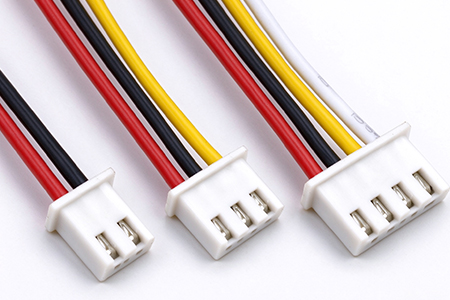
Types of Cooling Fan Connectors: A Practical Guide