With frequent heatwaves occurring worldwide, how can cooling technologies for telecoms infrastructure break the deadlock?

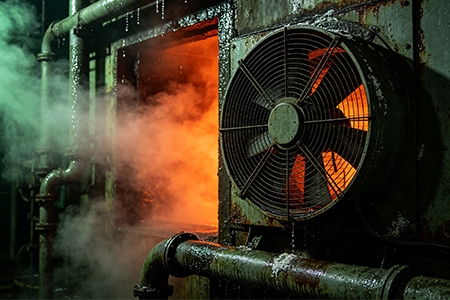
In the summer of 2026, the Northern Hemisphere was hit by the most widespread heatwave on record. From Texas in the United States to Rajasthan in India, and from the deserts of the Middle East to Xinjiang in China, surface temperatures of outdoor telecommunications cabinets frequently exceeded 75°C. At the same time, the explosive demand for AI computing power has caused the power consumption of 5G base stations and intelligent computing centres to rise exponentially. As ‘global extreme heat’ collides with ‘computing-induced heat’, traditional air cooling is approaching its physical limits, and a technological transformation—from air cooling to liquid cooling, and from a crude to a refined approach—is accelerating across the global infrastructure sector.
I. High Heat Generation from Computing Power: Air Cooling Reaches a Global Limit
The heat generated by modern telecommunications equipment is now on a completely different scale. 5G macro base stations utilise large-scale antenna arrays and gallium nitride power amplifiers; the power density of the RF front-end is more than three times that of 4G, with local heat flux densities exceeding 300 W/cm² and instantaneous surface temperatures of components reaching up to 120 °C—far exceeding the safety threshold of 85 °C. Furthermore, driven by the global AI race, the power consumption of a single AI chip has surged from 300 W to 1,000 W, whilst the power consumption per cabinet has exceeded 50–120 kW. As a result, traditional air-cooled cabinets in large-scale intelligent computing centres around the world are increasingly finding themselves in the predicament of being unable to dissipate the heat effectively.
No matter how strong the airflow, it cannot disperse the accumulated heat – this is the physical limit of air cooling. Once heat dissipation becomes inadequate, the equipment may, at best, experience throttling and stuttering; at worst, it may trigger overheating protection, leading to system downtime. For the global digital economy, which relies on the continuous operation of base stations and IDCs, every instance of overheating-induced downtime translates into tangible financial losses.
II. Global Evolution of Solutions: Air-Liquid Synergy and Intelligent Control
In the face of the global challenge of rising temperatures, cooling solutions for telecommunications infrastructure are undergoing a transition towards ‘precision’ and ‘liquid cooling’.
Refined air cooling to plug ‘cool air leaks’. In operational practices across desert regions of the Middle East and North America, engineers have observed that the cooling efficiency of air-conditioning outdoor units drops by more than 40 per cent when they become clogged with sand and dust. Measures such as thorough cleaning, sealing cabinet gaps with blind flanges, and upgrading cold aisle containment can effectively eliminate the wastage of cool air. This refined management approach remains the most cost-effective means of improving efficiency in existing air-cooled data centres worldwide.
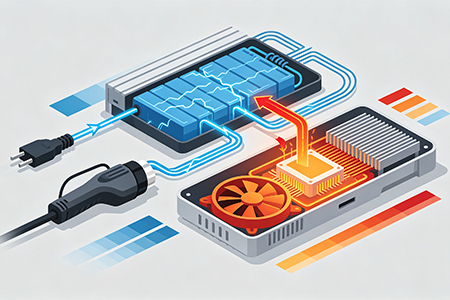
Hybrid ‘air-cooling + liquid-cooling’ architecture. A patented solution recently launched by an Asia-Pacific telecoms equipment manufacturer has established a hybrid ‘air-cooling + liquid-cooling’ thermal management architecture: liquid cooling handles heat removal for high-power-consumption components (such as GPUs and RF chips), whilst air cooling manages heat dissipation for low-power-consumption components and the ambient environment. This combination not only significantly enhances the cooling capacity per rack unit but also avoids the high retrofitting costs associated with pure liquid cooling and the noise and energy consumption issues of pure air cooling, making it particularly suitable for regions with high average annual temperatures, such as the Middle East and South-East Asia.
Liquid cooling has become the global mainstream trend. Currently, cold plate liquid cooling, owing to its technical maturity and manageable retrofitting costs, has become the standard configuration in large-scale intelligent data centres across Europe, the US and the Asia-Pacific region. More advanced immersion liquid cooling (where servers are directly immersed in a specialised coolant) is accelerating its commercial deployment, capable of reducing PUE to below 1.1 and increasing power density per cabinet by more than fivefold. According to forecasts by industry organisations, 2026 will mark the first year of widespread global adoption of liquid cooling, with the global market size for liquid cooling in high-performance computing centres expected to exceed 100 billion RMB.
III. From Passive Cooling to Active Thermal Management
In addition to hardware upgrades, thermal management strategies are also becoming more intelligent. The Adaptive Load Shedding and Thermal Management (ALSTM) framework, proposed in the latest IEEE research, can actively adjust computational loads during heatwaves to keep the system temperature below the 85°C shutdown threshold, sacrificing short-term peak performance in exchange for continuous availability. This concept of ‘predictive thermal management’ is particularly crucial for 5G infrastructure in tropical and desert climates.
Meanwhile, innovations at the materials level are also keeping pace. Integrated thermally conductive and electromagnetic wave-absorbing materials are becoming standard in 5G equipment worldwide, simultaneously addressing the two major challenges of heat dissipation and electromagnetic interference; magnetically levitated centrifugal compressors, with their oil-free, frictionless and highly energy-efficient performance, are emerging as the core cooling units in liquid-cooling systems and are attracting widespread attention from data centre operators in Europe and North America.
The extreme heatwaves experienced globally in 2026 have sounded a wake-up call for telecommunications infrastructure: traditional air-cooling solutions are approaching their physical limits, and across the US, Europe, the Middle East and the Asia-Pacific region, upgrading cooling technology has shifted from an ‘option’ to a ‘necessity’. Looking ahead, global telecoms cooling is accelerating its evolution towards ‘air-liquid synergy, liquid cooling dominance and intelligent control’—this is not merely a technological iteration, but an inevitable choice for the global digital economy in responding to climate challenges.
Selecting Cooling Fans for Special Environments: Dealing with High Temperatures, High Humidity and Corrosive Environments