The Heat Dissipation Revolution in Ovens and Air Fryers: The Technology Behind the Fan

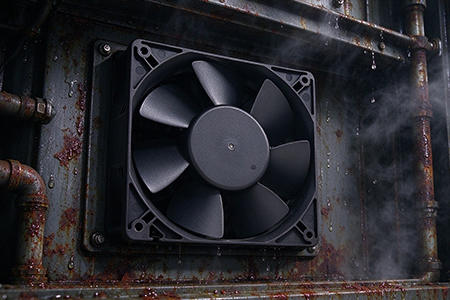
In modern kitchens, ovens and air fryers have become indispensable cooking appliances, yet both face a common challenge: heat management. Effective heat dissipation not only impacts device performance but directly influences safety and longevity. Behind this, cooling fans play a crucial role.
Thermal Challenge: Why Heat Dissipation Matters
Whether in conventional ovens or air fryers, internal temperatures can exceed 200°C during operation. Sustained high temperatures pose three major issues:
1.Electronic component overheating: Control panels, circuit boards and other precision components are highly temperature-sensitive
2.Outer casing overheating: May cause burns or damage to surrounding items
3.Reduced efficiency: Overheated environments diminish the performance of heating elements
Air Fryers: The Dual Mission of the Fan
The thermal management challenge for air fryers is particularly unique. Unlike conventional ovens, air fryers feature a high-speed circulating fan within their interior. This fan effectively fulfils a dual role:
Cooking Function: Circulating hot air at dozens of revolutions per second to ensure even heating of food, creating a crispy exterior
Heat Dissipation Function: Simultaneously cooling the control circuitry and outer casing during operation
This dual-purpose design necessitates a fan capable of high rotational speeds and extended longevity, while noise control presents a significant technical challenge.
Professional Ovens: Layered Heat Dissipation System
High-end ovens typically employ more sophisticated layered heat dissipation solutions:
1.Internal circulation fan: Distributes heat evenly to prevent localised overheating
2.Dedicated cooling fan: Specifically cools the control panel and circuit boards
3.Air duct design: Guides hot air along specific pathways to avoid sensitive areas
The Technological Evolution of Kitchen Extractor Fans
Modern kitchen extractor fans have undergone significant advancements:
● Brushless motors: Extended lifespan, reduced noise, enhanced energy efficiency
● Intelligent temperature control: Automatically adjusts fan speed based on internal ambient temperature
● High-temperature resistant materials: Capable of sustained operation in environments exceeding 100°C
● Grease-resistant design: Special coatings prevent oil residue accumulation that compromises balance
User Guidelines: Key Maintenance Points for Heat Dissipation
Ensure ventilation: Maintain at least 10 centimetres of clearance around the appliance
1.Regular cleaning: Grease buildup on fan grilles severely impairs heat dissipation efficiency
2.Abnormalities detection: Sudden increases in fan noise may indicate impending malfunction
3.Avoid obstruction: Ventilation outlets and inlets must never be covered
With the advancement of smart homes, next-generation cooling systems will become increasingly intelligent. Networks of temperature sensors will monitor device temperatures in real time, while adaptive fan systems automatically adjust cooling strategies based on cooking stages and ambient temperatures. Heat recovery technology may even utilise residual heat for food warming or space heating.
Though compact within kitchen appliances, cooling fans serve as guardians of both safety and performance. Quietly rotating, they maintain the delicate balance between the high temperatures required for cooking and the safety of the appliance itself, allowing us to savour our meals without concern. When selecting appliances, paying attention to their cooling design represents an investment in long-term, safe usage.
Silent and Efficient: How Cooling Fans Are Revolutionizing the Hair Dryer Experience
Precision Temperature Control: A Tailor-Made Thermal Solution for High-Speed Dome Cameras