The golden race track for cooling fans in 2025: explosive demand for data centers and 5G infrastructure

1、 Demand side explosion: the urgent need for heat dissipation under the wave of digital infrastructure
The global data center market is expected to exceed $400 billion by 2025, with a compound annual growth rate of over 12%. This growth has directly driven a surge in server cooling demand - each standard rack server requires 6-8 high-performance cooling fans, while a medium-sized data center often deploys thousands of servers. According to industry analysis, data center cooling systems account for 40% of overall energy consumption, and efficiency improvement is urgently needed.
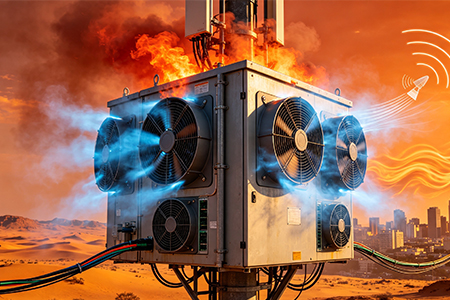
At the same time, global 5G base station construction has entered a peak period. China plans to build 6 million 5G base stations by 2025, and the global total will exceed 10 million. The high-power characteristics of 5G devices increase their cooling requirements by more than three times compared to 4G, and miniaturized cooling fans have become the core components of base station equipment. It is worth noting that the popularity of edge computing nodes has further expanded the application scenarios of cooling solutions.
2、 Technological Evolution: Industrial Upgrade from Air Cooling to Intelligence
Traditional cooling fans are undergoing four major technological changes: firstly, magnetic levitation bearing technology extends the lifespan of the fan to 150000 hours and reduces noise by 20 decibels; Secondly, using graphene composite materials for fan blades can increase heat dissipation efficiency by over 35%; Thirdly, the intelligent speed regulation system automatically adjusts the speed through real-time temperature monitoring, achieving a 40% energy-saving effect; Finally, modular design reduces maintenance costs by 60%.
Industry leaders such as Delta Electric, Nidec, and Ebm papst have launched smart fans with integrated IoT sensors, which significantly reduce the risk of data center downtime through predictable maintenance. By 2025, it is expected that 75% of mid to high end cooling fans will have networking capabilities, forming a complete cooling management system.
3、 Supply Chain and Market Pattern: The Rise of Chinese Manufacturers
China's production of cooling fans accounts for 65% of the world's total, but it is still dominated by Japanese and German companies in the high-end market. In 2025, this pattern may change - companies such as Huawei Digital Energy and Gree Electric are increasing their R&D investment and making breakthroughs in the fields of magnetic levitation and liquid cooling hybrid heat dissipation. At the same time, the expansion of manufacturing bases in Southeast Asia has enabled Chinese manufacturers to maintain their cost advantage.
Investment institutions predict that the global cooling fan market will grow from $12 billion to $18 billion by 2023-2025, with data centers and 5G applications accounting for over 50%. In the secondary market, the P/E ratio of related leading enterprises generally reaches 25-30 times, reflecting the market's optimistic expectations for the industry's prospects.
4、 Challenges and Future Prospects
Despite the broad prospects, the industry still faces three major challenges: fluctuations in rare earth material prices affecting motor costs; International carbon reduction standards raise the technical threshold; Geopolitical supply chain risks. Successful enterprises need to build a triple moat of technology, cost, and compliance.
In the next three years, with the popularization of liquid cooling technology, traditional fans may face replacement pressure. But experts believe that in most application scenarios, the improved smart fan will still maintain its cost-effectiveness advantage. Enterprises that can provide comprehensive heat dissipation solutions and collaborate deeply with chip manufacturers will win the biggest dividends in this round of industrial upgrading.
New Energy Vehicles and Energy Storage: The Next Billion Dollar Market for Cooling Fans
How can cooling fans help AI high computing power servers run efficiently and stably