Why do drones need fans for heat dissipation?

With the high workload and improved performance of drones, heat dissipation has become a major challenge in drone design. As a basic cooling method, fan cooling is widely used in drones. This article will introduce the reasons why drones need cooling fans to dissipate heat and the implementation methods of fan cooling.
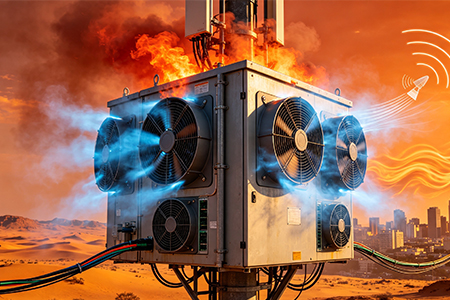
The internal components of drones generate a large amount of heat during operation. If they cannot dissipate heat in a timely and effective manner, it can lead to serious equipment damage and safety accidents. Fan cooling can effectively reduce the internal temperature of drones, ensuring their smooth operation.
The way to achieve fan cooling
There are various ways to achieve fan cooling, among which the most common are the following two:
1. Embedded cooling fan: A fan is embedded in the body of the drone, which works together with natural ventilation and forced ventilation of the fan to dissipate heat. This method is suitable for small drones, whose fan volume and air volume are relatively small, so it can effectively avoid noise and electricity consumption.
2. Integrated cooling fan: Install cooling fins and fans on the body of the drone, transfer the heat generated inside the drone to the cooling fins, and then exhaust the hot air through the fan. This method is suitable for large drones, which require larger heat sinks and fans, which can more effectively reduce temperature, but also generate noise and electricity consumption.
Overall, fan cooling is a widely used drone cooling method that can effectively reduce temperature in a short period of time. But at the same time, it is also necessary to consider manufacturing costs, influencing factors such as noise and electricity consumption. Therefore, when designing drones, it is necessary to choose according to the actual situation and needs to achieve the best heat dissipation effect.
Classification of cooling fans for industries
Talking about Cooling Fans - Starting from Wind Power Characteristics
Related blog