Talking about Cooling Fans - Starting from Wind Power Characteristics

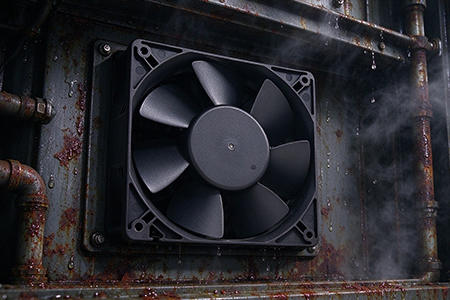
The cooling fan introduces air into the radiator and exhausts it to lower the temperature of the components on the fan, thereby maintaining the stable operation of the equipment. The wind power characteristics of a fan refer to its air volume and pressure, which are important indicators for evaluating fan performance.
Air volume refers to the volume of air flowing through a fan within a fixed time. Increasing air volume can improve the heat dissipation efficiency of equipment, but it can also increase noise levels and power consumption. The air volume depends on factors such as the number of blades, blade length, and rotational speed of the fan.
Wind pressure refers to the pressure that a fan can generate, which can push air towards the interior of the device, thereby helping the radiator better absorb heat. Increasing wind pressure can improve heat dissipation efficiency, but it can also increase fan power consumption and operating temperature. The wind pressure depends on factors such as the shape, area, and rotational speed of the fan blades.
When selecting a cooling fan, it is necessary to consider the wind characteristics based on factors such as the equipment's cooling requirements, space limitations, and budget, and choose the appropriate fan model and installation location. In addition, attention should be paid to the quality and lifespan of the fan to ensure the reliability and stability of the equipment.
Why do drones need fans for heat dissipation?
Reduce Fire for Your Hardware - Consumer Guide for Cooling Fans