The Importance of Thermal Management in Electric Vehicle Chargers

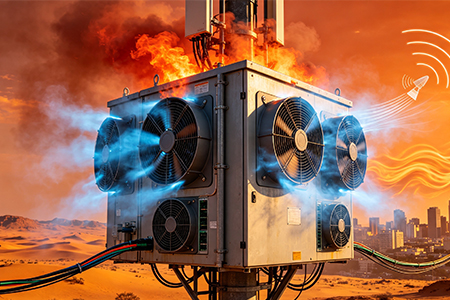
With the rapid global adoption of electric vehicles (EVs), the demand for charging infrastructure is growing by the day. From domestic AC slow charging to DC fast charging on motorways, charging power continues to increase and charging speeds are becoming ever faster. However, whilst the industry strives for ‘5 minutes’ charging for 200 kilometres of range’, a key yet often overlooked technical aspect is quietly playing a decisive role: charger thermal management.
Thermal management, in simple terms, refers to how heat generated during the charging process is effectively dissipated, dispersed or utilised to ensure the equipment operates within a safe temperature range. It not only guarantees the stability of the equipment but is also central to its safety, efficiency and service life.
Why do chargers generate heat?
Electric vehicle chargers (whether AC charging points or DC charging modules) are, by their very nature, high-power power electronic devices. Their core internal components include rectifiers, power factor correction (PFC) circuits and DC-DC converters; these components inevitably generate conduction losses and switching losses during operation. When the charging power reaches tens or even hundreds of kilowatts, even with an efficiency as high as 95 per cent, several kilowatts of energy are still converted into heat. If this heat cannot be dissipated promptly, the internal temperature will rise rapidly.
The Multiple Risks Posed by Overheating
1. Safety Hazards — Fire Risks and Malfunctions
Excessive temperatures accelerate the ageing of insulating materials, reducing the effectiveness of electrical clearances and creepage distances; in severe cases, this may lead to short circuits or even fires. At the same time, overheating may cause electrolytic capacitors to bulge and solder joints to melt, resulting in permanent damage to the equipment.
2. Reduced Charging Efficiency
The on-resistance and switching losses of power semiconductor devices (such as IGBTs and MOSFETs) increase as temperature rises. This means that the higher the temperature, the greater the device’s internal losses, with more electrical energy being wasted as heat, creating a vicious cycle of ‘heat generation – reduced efficiency – further heat generation’. This not only increases electricity costs but also prolongs the actual charging time.
3. Restricted charging speed
In DC fast-charging scenarios, the temperature of the charging gun and cable is fed back in real time to the charging management system. Once the temperature approaches safety thresholds, the system automatically reduces the charging power to protect the equipment. This is one of the common reasons why many vehicle owners complain that ‘the rated power is 150 kW, but the actual output is only 90 kW’—insufficient thermal management capacity limits the sustained output of peak power.
4. Reduced Equipment Lifespan
According to the Arrhenius model, the lifespan of electronic equipment is closely related to its operating temperature. For every 10°C increase in temperature, the lifespan of an electrolytic capacitor is approximately halved. Effective thermal management can directly extend the service life of charging points, thereby reducing maintenance and replacement costs for operators.
Current mainstream thermal management technologies
To address the challenges outlined above, the industry has developed a variety of thermal management solutions:
● Natural cooling: Relying on heat sinks and air convection, this is suitable for low-power (≤7 kW) domestic charging points; it is low-cost but has limited heat dissipation capacity.
● Forced air cooling: This uses fans to accelerate airflow and is the choice for most commercial AC charging points and some DC modules; it offers good value for money but presents issues with noise and dust ingress.
● Liquid cooling technology: This is currently the mainstream approach for high-power fast charging (≥150 kW). Coolant flows through the power modules and inside the charging cables, carrying heat to an external heat exchanger for dissipation. Liquid cooling is far more efficient than air cooling, supports higher power densities and results in lighter charging guns. Liquid-cooled supercharging solutions from manufacturers such as Tesla’s V3 Supercharger and Huawei fall into this category.
● Phase-change cooling and immersion cooling: These are cutting-edge technologies geared towards future megawatt-class charging. By utilising phase-change materials or dielectric liquids to directly immerse heat-generating components, they can achieve optimal temperature uniformity and heat dissipation.
A System-Level Perspective: From the Charging Pistol to the Grid
It is worth noting that the thermal management of chargers cannot be viewed in isolation. Overheating of the charging pistol will directly interrupt the charging process; the temperature of the charging cable affects its current-carrying capacity; and the distribution transformers connected to the grid also have thermal capacity limitations. Comprehensive thermal management of a charging system requires coordinated optimisation across the charging pistol, cable, charging module, distribution cabinet and back-end dispatch strategies.
As electric vehicles evolve towards higher voltage platforms (800V → 1000V) and greater charging power (500kW → megawatt-class), thermal management has risen from a ‘supporting function’ to a ‘core competitive advantage’. It is no longer merely a simple combination of heat sinks and fans, but rather a multidisciplinary field involving materials science, fluid mechanics, power electronics and intelligent control.
For consumers, when selecting a charging point, it is worth paying closer attention to its thermal management solutions—metrics such as liquid cooling, intelligent temperature control algorithms and IP protection ratings—as these reflect the device’s true capabilities far more accurately than mere power figures. After all, a charger capable of delivering stable, safe and sustained power output is the mark of a truly reliable piece of equipment.
Heat is the arch-enemy of charging, and excellent thermal management is the most powerful weapon for defeating this enemy. In the wave of electrification, whoever can best manage temperature will gain the upper hand in the race for the best charging experience.
Selecting Cooling Fans for Special Environments: Dealing with High Temperatures, High Humidity and Corrosive Environments
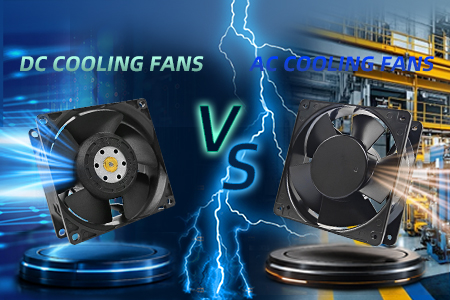
DC Fans versus AC Fans: A Silent Revolution in the Future of Cooling