The Role of Cooling Fans in Heat Dissipation for Digital Signage Displays and Their Advantages

In bustling shopping malls and at bus stops, digital signage displays often operate around the clock. Prolonged operation inevitably leads to heat buildup—high temperatures not only cause the screen to dim and slow down, but in severe cases can even burn out internal components. To ensure the stable operation of digital signage displays, cooling fans play an indispensable role.
The Core Function of Cooling Fans
The interior of a digital signage display is a relatively enclosed space, and the power supply, motherboard, and backlight module are all major sources of heat. Without effective cooling measures, heat will continue to build up, much like a “smoldering fire.”
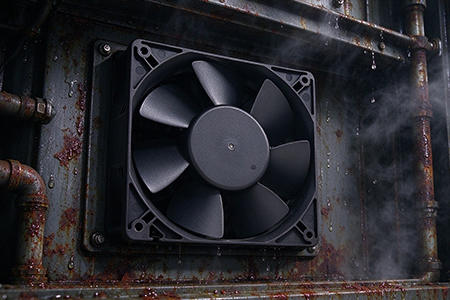
The function of a cooling fan is simple and straightforward: it blows hot air out and draws in cool air.
Specifically, the fan creates a clear airflow path inside the digital signage display—cool air enters through intake vents at the bottom or sides, flows past the heat-generating components to dissipate heat, and is then expelled through exhaust vents at the top. This forced convection cooling is far more efficient than natural convection, ensuring that the internal temperature is always maintained within the tolerance limits of the components.
Four Major Advantages of Cooling Fans
1. High Cooling Efficiency and Controllable Costs
Compared to complex solutions such as liquid cooling and semiconductor cooling, air cooling is the most mature and cost-effective technical approach. A set of well-designed fans is sufficient to handle the heat generated by the vast majority of digital signage displays, addressing the core issue in the most economical way.
2. Intelligent Temperature Control, Energy-Efficient and Quiet
Most digital signage displays today are equipped with temperature-controlled fans—when temperatures are low, the fans operate at low speeds or even stop, making them virtually inaudible; only when temperatures rise do they increase their speed to enhance cooling. This “on-demand” operation mode not only saves energy but also prevents continuous noise from affecting the surrounding environment.
3. Precise Heat Dissipation, Protecting Critical Components
Through strategic placement, fans can direct airflow precisely to the areas most in need of cooling—such as directly over the motherboard chips and power supply modules. This targeted cooling approach effectively prevents localized overheating and extends the service life of critical components.
4. Highly Adaptable, Waterproof, and Durable
Manufacturers have developed waterproof cooling fans specifically for outdoor digital signage displays. These fans feature a special design and sealing process that not only effectively dissipates heat but also prevents rain and dust from entering, ensuring the equipment continues to operate reliably even in harsh weather conditions.
For digital signage displays, cooling fans act as a “respiratory system”—continuously expelling internal heat to keep the equipment “cool.” It is this seemingly simple system that ensures the stable, day-to-day operation of the displays, allowing every frame to be displayed clearly. Only by selecting the right cooling solution can the longevity and stability of a digital signage display truly be “seen.”
Cooling fans in energy storage systems solve heat dissipation issues
Silent and Efficient: How Cooling Fans Are Revolutionizing the Hair Dryer Experience