What are the advantages and disadvantages of oil containing cooling fans and double ball cooling fans?
σīu | 2024-11-05

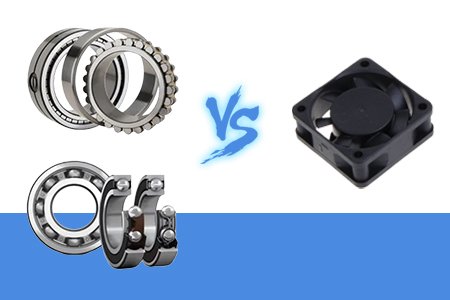
Oil containing cooling fan:
advantage:
Low price: The manufacturing cost is relatively low, so the selling price in the market is usually relatively cheap, suitable for cost sensitive users or devices with limited budgets.
Quiet operation: During operation, due to the presence of lubricating oil, the noise generated by friction is relatively small, providing a relatively quiet operating environment for the equipment.
Resistance to external impact: Compared to some other types of fans, oil containing cooling fans are less likely to be damaged during transportation or when subjected to a certain degree of external impact, and have better impact resistance.
Low price: The manufacturing cost is relatively low, so the selling price in the market is usually relatively cheap, suitable for cost sensitive users or devices with limited budgets.
Quiet operation: During operation, due to the presence of lubricating oil, the noise generated by friction is relatively small, providing a relatively quiet operating environment for the equipment.
Resistance to external impact: Compared to some other types of fans, oil containing cooling fans are less likely to be damaged during transportation or when subjected to a certain degree of external impact, and have better impact resistance.
Disadvantages:
Short lifespan: The inner diameter of the bearing is prone to wear, and after prolonged use, the lubricating oil will gradually evaporate and dry, leading to a decrease in the performance of the fan. The service life is generally around 5000-8000 hours.
Susceptible to dust: Dust in the air is easily sucked into the motor core and mixed with lubricating oil around the bearings to form sludge, which not only increases operating noise but may also cause the fan to jam and not rotate.
Poor activation effect of motor operation: The gap between the bearing and the shaft core is small, and when the fan starts, a large amount of power is required to make the shaft core rotate, which will affect the activation effect of the motor operation.
Short lifespan: The inner diameter of the bearing is prone to wear, and after prolonged use, the lubricating oil will gradually evaporate and dry, leading to a decrease in the performance of the fan. The service life is generally around 5000-8000 hours.
Susceptible to dust: Dust in the air is easily sucked into the motor core and mixed with lubricating oil around the bearings to form sludge, which not only increases operating noise but may also cause the fan to jam and not rotate.
Poor activation effect of motor operation: The gap between the bearing and the shaft core is small, and when the fan starts, a large amount of power is required to make the shaft core rotate, which will affect the activation effect of the motor operation.
Double ball cooling fan:
advantage:
Long service life: Two ball bearings are used, in which several small steel balls rotate around the axis with low friction and relatively low wear. The service life can reach about 50000-100000 hours, which is very durable.
High stability: The double ball bearings are fully embedded in the fan, and the rotating parts are not in direct contact with the outside world. In a sealed environment, the working environment of the bearings is relatively stable and suitable for various working conditions.
Wide applicability: Whether in high temperature, high humidity, or harsh working environments, dual ball cooling fans can maintain good performance and can be applied to equipment with high heat dissipation requirements.
Disadvantages:
Loud noise: Due to the increase in friction points of ball bearings, the noise generated during operation is relatively loud, especially at high speeds, where the noise problem may become more pronounced.
High cost: The manufacturing cost of dual ball cooling fans is relatively high, which makes their prices in the market relatively expensive and increases the overall cost of the equipment.
What are the nine precautions for running a cooling fan?
How to replace the cooling fan filter?
Related blog