The Respiratory System of Industrial Equipment: Have You Chosen the Right One? — A Guide to Selecting Cooling Fans

On an industrial production line, a piece of equipment suddenly ground to a halt. After investigation, the problem was traced to a small cooling fan—this often-overlooked supporting player, yet the very respiratory system ensuring the stable operation of the machinery. Today, we'll discuss how to select the right cooling fan for your industrial equipment.
Do not underestimate cooling fans
In industrial environments characterised by high temperatures, dust, and continuous operation, the role of cooling fans is far more critical than we might imagine:
●Preventing component overheating and damage, thereby extending equipment lifespan
●Maintaining stable equipment performance and reducing failure rates
●Avoiding downtime losses caused by overheating
Four Key Indicators for Selecting Cooling Fans
1. Balance of Airflow and Static Pressure
●Airflow determines the total volume of air movement, typically measured in CFM.
●Static pressure determines the fan's ability to overcome resistance (e.g., heat sinks, filters).
●Select an optimal balance point based on the equipment's cooling requirements and internal structural resistance.
2. Noise and Efficiency Considerations
While industrial environments tolerate higher noise levels, prolonged high-frequency noise can still impact working conditions. High-efficiency fans reduce energy consumption while delivering equivalent cooling performance, yielding significant long-term savings.
3. Environmental Adaptability
●Protection Rating: IP54 or higher provides effective dust and water resistance
●Temperature Tolerance: Industrial environments experience significant temperature fluctuations; fans with wide temperature ranges are required
●Corrosion Resistance: Special attention is needed in chemical processing, coastal, and other demanding environments
4. Lifespan and Reliability
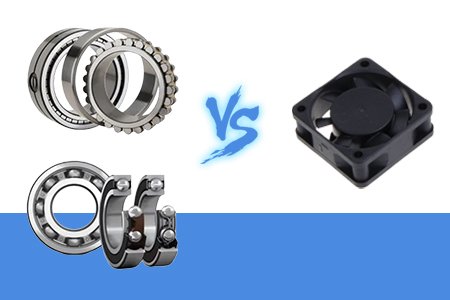
Industrial equipment often requires 24-hour uninterrupted operation. Selecting fans with ball bearings, high-quality motors, and durable blades may involve slightly higher initial costs. However, this reduces replacement frequency and minimises downtime risks, proving more economical in the long term.
Selection for Special Application Scenarios
●High-dust environments: Opt for models with high protection ratings and blade designs that resist dust accumulation
●Humid environments: Prioritise fully sealed designs and corrosion-resistant coatings
●High-vibration locations: Pay particular attention to the fan's shock resistance and secure installation
Maintenance and Installation Essentials
Selecting the right fan is only the first step; correct installation and maintenance are equally crucial:
●Ensure the air inlet remains unobstructed
●Regularly remove accumulated dust to maintain clean blades
●Observe installation orientation to ensure airflow direction aligns with design requirements
●Monitor fan operational status and promptly replace malfunctioning units
Selecting cooling fans for industrial equipment is not a matter of simply purchasing based on size. It requires comprehensive consideration of multiple factors, including the equipment's heat dissipation requirements, operating environment, and performance specifications. A suitable cooling fan functions like a healthy respiratory system for the equipment, ensuring stable operation at peak performance.
Investing in the correct cooling solution may appear to increase initial costs, but it actually prevents potential future expenses from costly repairs and production losses through proactive safeguarding. Have you truly selected the right ‘respiratory system’ for your industrial equipment?
Precision Temperature Control: A Tailor-Made Thermal Solution for High-Speed Dome Cameras
Air-Conditioned Workwear Cooling Fan: The Portable Cooling Core for Workers in High-Temperature Environments